Getting Back to Analogue
This month, my son came home during his university spring break, and we spent a beautiful week together—visiting his favourite restaurants, shopping for weirdly oversized clothes and lingering over long, meaningful conversations.
Suddenly, he asked me, “Mom, will you write a letter to me?”
On average, we speak at least twice a day over the phone, totalling 30-40 minutes each day. So, this wasn’t a request for more conversation, but it was a request for more thoughtful, lingering ones that will remain even when I’m no more. I promised him I would.
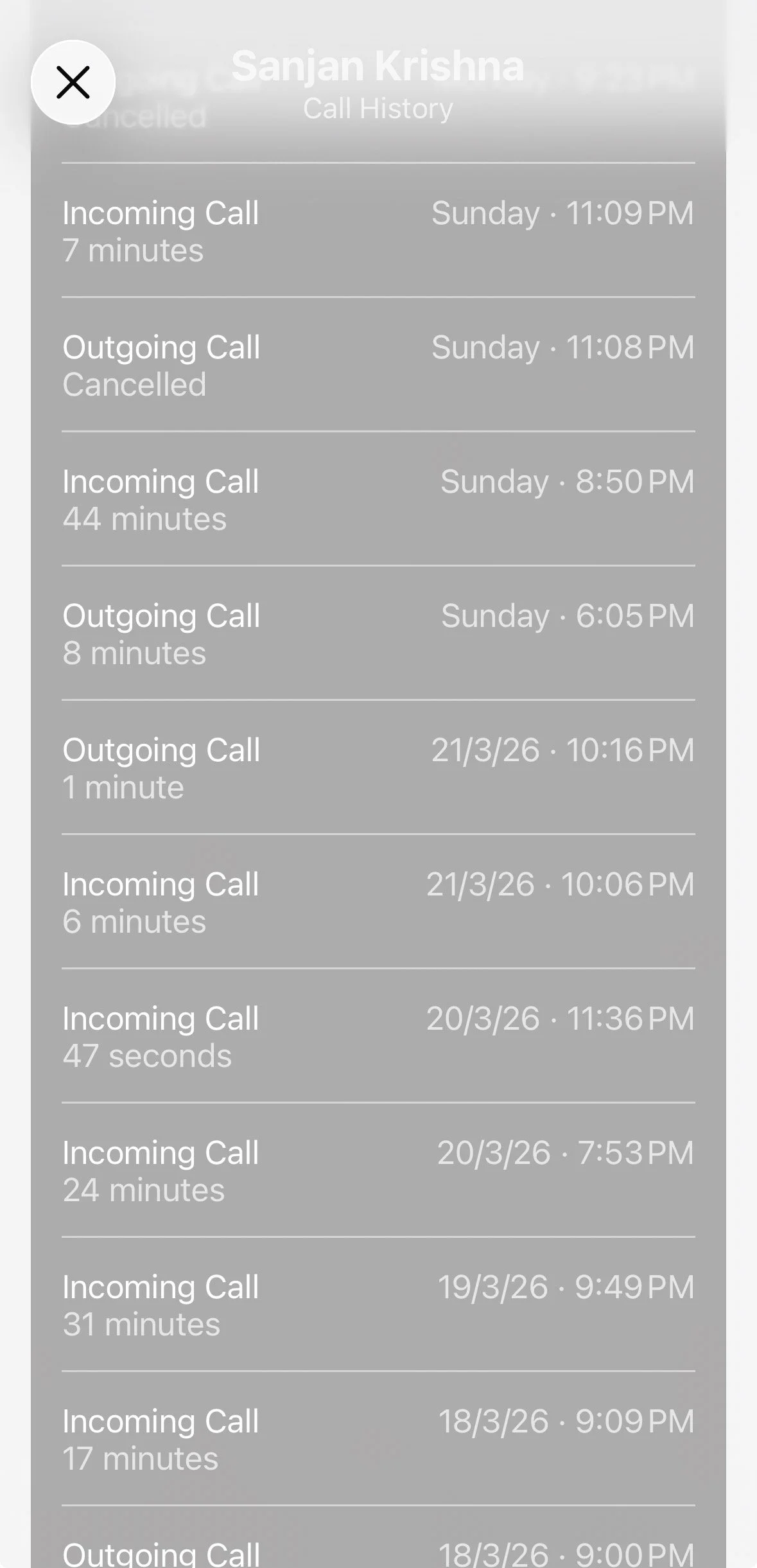
Our call history last few days
Last week, I had visited the Chhatrapati Shivaji Maharaj Vastu Sangrahalaya (That’s quite a mouthful! It’s the Mumbai History Museum, in simpler terms.) They had a special exhibition, ‘Networks of the Past’ with over 300 artefacts brought in from various Indian and International museums. The exhibition was an exploration of how ancient India, stretching from the Harappan era to the Gupta period, was deeply connected to the wider world through trade, culture, and ideas. There were exchanges between India, Egypt, Mesopotamia, Persia, and China.
When I visit a museum, I am overwhelmed with ideas. I click a lot of pictures of the artefacts and explanations, type notes to myself and become oblivious to the world around me. This time, as I clicked the sixth photograph, a security guard boomed into my ears, “No photography allowed.”
“I paid for the mobile photography,” I said.
“That doesn’t apply for the exhibition,” he said.
I gave a sigh. It seemed so unfair and I was angry for a few seconds. Then, I calmly whisked out my pocket notebook and a pen and began sketching out the artefacts, making notes about what they were along with the ideas they sparked. Initially, it seemed cumbersome, but within a few minutes, I lost myself to the moment completely.
When the clock struck six, I was able to go through the exhibition completely but couldn’t visit any other part of the museum. I had spent three hours in the exhibition, and I had about 10 pages of sketches and notes. This visit was bound to remain forever in my mind.
That was when I decided that I would never again take a picture in a museum. I was going to carry a pocket notebook and a ballpoint pen, slow down, observe, process the meaning and note down my own thoughts and reactions in the moment. Passively clicking photos that remain forgotten in a gallery makes no meaning.
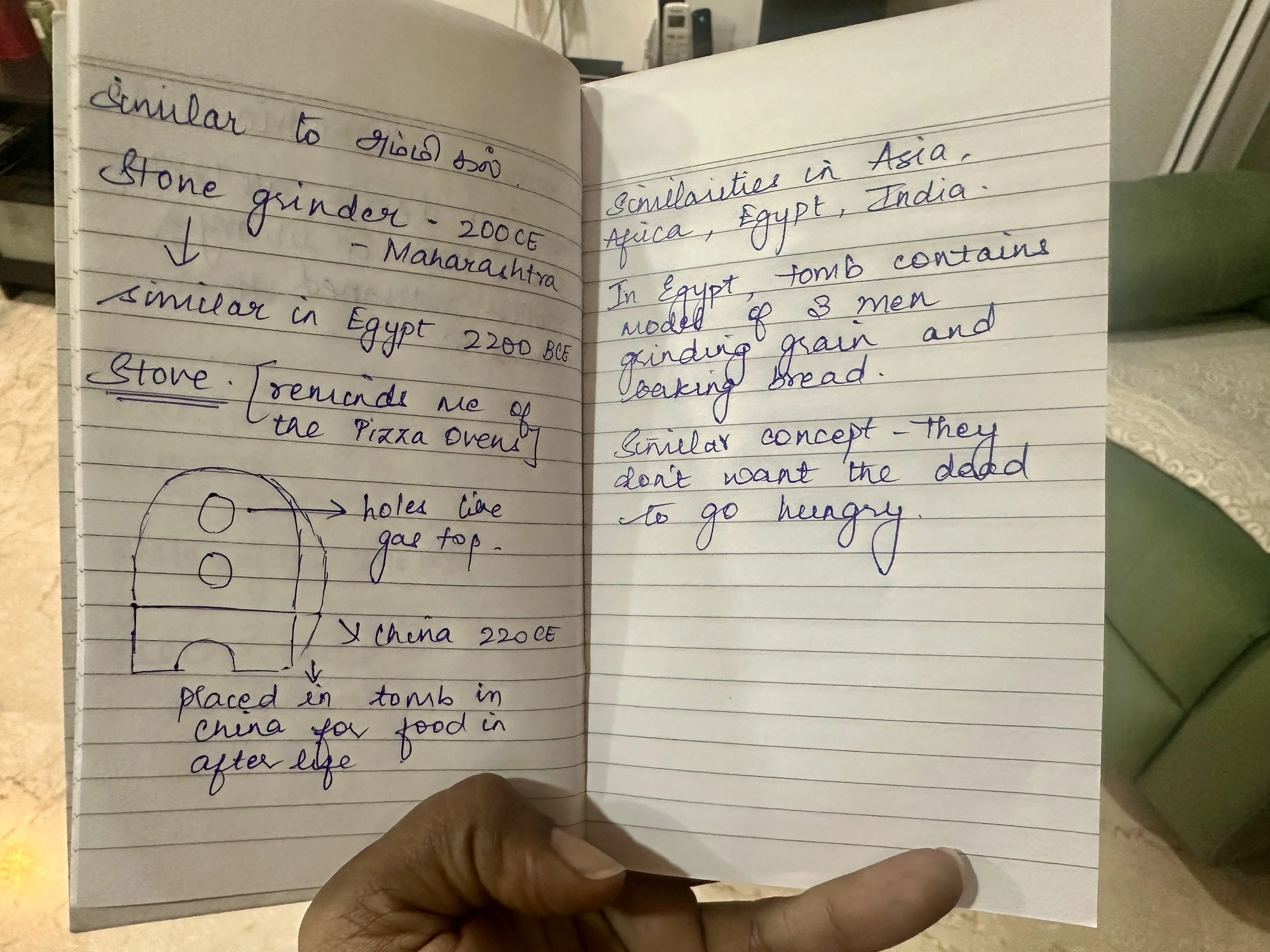
A page of hastily written notes
While digital tools have made our life quicker and easier, they aren’t always the most thoughtful or impactful ones. In the recent years, I have been slowly going analogue.
I’ve always enjoyed writing in a physical journal with a fountain pen, using a paper planner and a commonplace book. (My commonplace book video is popular on YouTube with 41K views and 65 comments :) Check it out here)
Also, I write the first draft of my stories and books by hand. Sometimes, the second or third draft too if the story goes through significant changes. It has been a year since I stopped wearing a smart watch. I’ve started using a physical recipe journal where I’ve painstakingly copied out all the recipes that I have enjoyed making over the years.
I hardly read any eBooks and have let paperbacks and hardbacks take over my home. Though I learned how to use Procreate and Photoshop, I’ve stopped doing any digital illustrations. I love the feel of paints and markers and how I can lose myself for hours while playing around with them. I have started taking my physical camera whenever we go out as a family. I have started printing out my favourite pictures and putting them in photo albums.
I have not switched to a non-smart phone because Whatsapp is a major part of how I communicate with my elder son who is abroad and because my second son’s school groups share important information there. Apart from that, I have deleted all social media apps on my phone. I use social media but more mindfully now.
Every time, I need to use Instagram or Facebook, I freshly download it, log on and then use it. So, I do not use it as frequently as before. I feel much calmer and focused than before.
Going analogue adds a romantic feel to your life – the slow scratch of a pen on paper, the swish of a paint brush on canvas, marking your place in a book with a bookmark, looking at a photo album together. When you slow down and work with your hands, there’s a tactile sensation that makes the experience personal and grounding.
Try making small changes and use analogue tools whenever you can.
Apart from regaining attention, clearing mental space and pushing you to create rather than consume, they add charm and beauty to life.
This article first appeared in my email newsletter. You can join the newsletter here.
